This article is published in Italian on Andersen March issue and in Norwegian on the web magazine Periskop.no, here
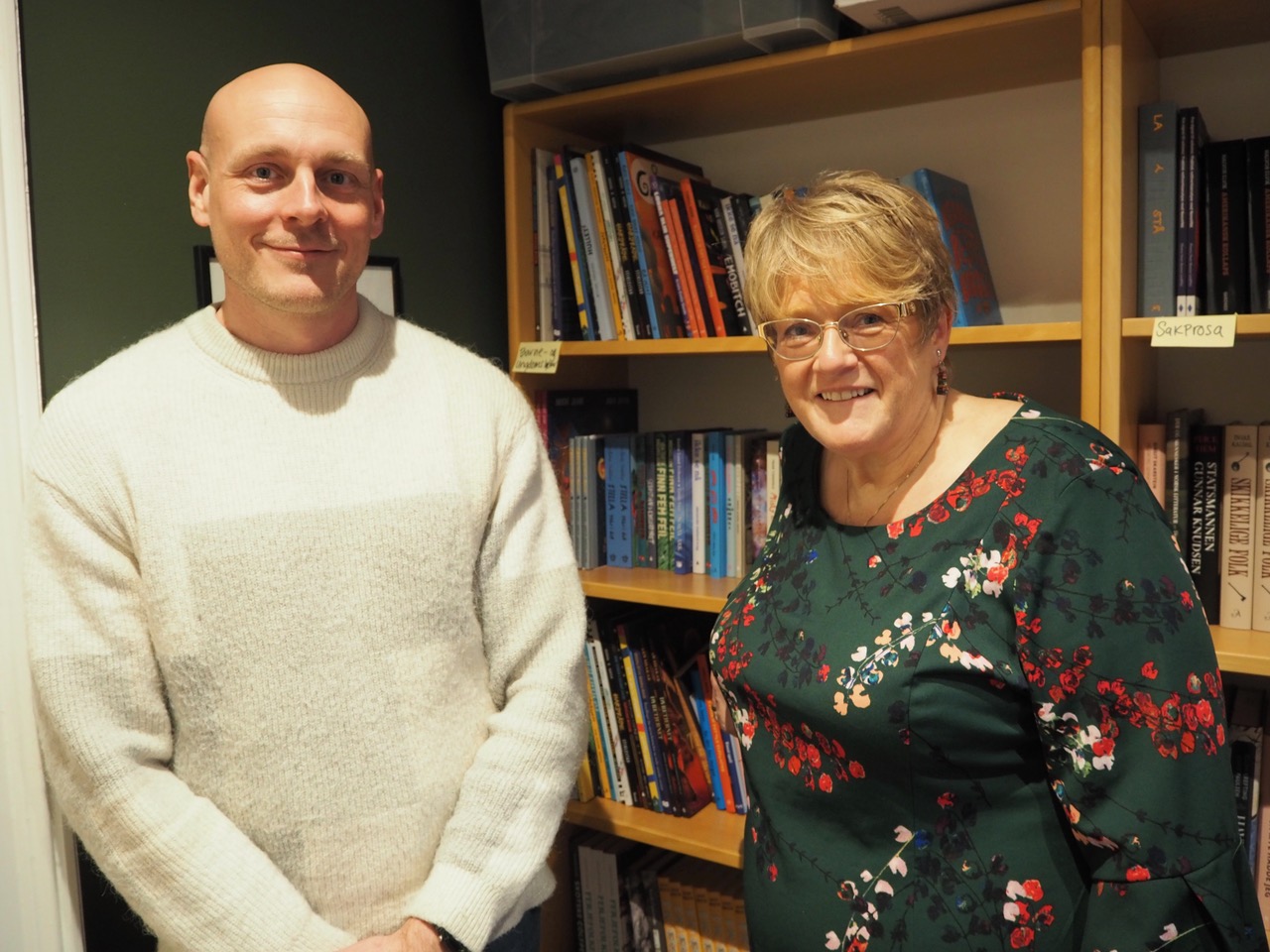
A month before Norway is to be guest of honour at the Bologna Children’s Book Fair, we have taken the pulse of Norwegian children’s literature together with Trine Skei Grande, Chief Executive of the Norwegian Publishers Association, and Alexander Løken, President of Norwegian Writers for Children.
In the international PIRLS study from 2023, Norwegian children reported the lowest enjoyment of reading. Right at the bottom of 65 countries was Norway, the country which in just a few weeks will be this year’s guest of honour at the Bologna Children’s Book Fair. Only 13% of Norwegian ten-year-olds said they liked reading, and leisure reading was something depressingly few reported engaging in. In addition, research showed that only one in three Norwegian toddler parents read aloud with their children.
Then alarm bells rang. The year after, in 2024, the government launched a reading strategy: now the figures were to be reversed. And perhaps things are moving towards brighter reading times alongside the winter solstice, bringing slightly a little more daylight to the Norwegian winter. At any rate, bookshops reported a clear sales increase for children’s and young adult books in 2025. At least there is hope, says the President of Norwegian Writers for Children (NBU), Alexander Løken. We have gathered him and the Chief Executive of the Norwegian Publishers Association, Trine Skei Grande, for an update shortly before it is Norway’s turn to shine in Bologna.
Elevating every day
NBU is an authors’ association for writers of children’s literature in Norway. Nearly 80 years ago, two brave authors of (that times’) teenage girl books turned up at the Publishers Association and demanded equal rights for children’s book authors as for authors of fiction for adults. They were met with a cold shoulder, but about 40 years ago a standard contract was in place. It secured equal rights for all authors. NBU today counts 500 members, and in hearings in the parliament, NBU stands side by side with other authors’ associations, and thus the voices from the children’s book field become clearer in the public debate.
‘We don’t have to wait our turn, you could say. An authors’ association that is to embrace all genres and target groups will constantly have to prioritize. But NBU elevates children’s literature every day. That’s why NBU is important’, Løken believes.
‘Moreover, the Norwegian Institute for Children’s Books (NBI) would not have seen the light of day without NBU’, says the Chief Executive of the Publishers Association, Trine Skei Grande.
The writer training programme at NBI has helped bring forth several original voices in Norwegian children’s and young adult literature in recent years. This educational programme is a product of a strong NBU, Grande believes. From 2018-2020 Grande was Minister of Culture in Norway.
Taboos for the teenagers
Right now the government’s reading strategy is on the agenda both at NBU and the Publishers Association. When reading is to be emphasized, both the industry and reading researchers must be involved, the professional weight is essential in this work, Løken believes. He thinks NBU achieves political breakthroughs partly because the desire to emphasize children’s literature is central to the government’s reading strategy. Strengthened purchasing schemes for literature for Norwegian school libraries (administered by the Arts Council Norway) is an important matter for Løken at the moment. That includes a strengthening of the purchasing scheme for graphic novels, which are extremely popular, but libraries’ selections do not always match the demand from children.
What would you say is the clearest trend in Norwegian children’s literature at the end of 2025?
‘Over time, it has been characterised by social realism. At the same time, we now see a shift towards suspense, fantasy and horror’, Løken believes.
‘In addition, Norwegian graphic novels stand strong: the genre that has been called Nordic manga, and which started with Malin Falch’s Nordlys series, has become extremely popular’, says Trine Skei Grande. She herself bought the first two volumes of the graphic novel series about the Viking king Harald Hardråde for her nephew for Christmas. This series is a regular graphic novel, not a Nordic manga.
‘In addition, young adult literature is a fearless genre in Norway. It takes up taboo and complex themes due to mental health, sexuality and drugs. This is a narrow but important part of Norwegian literature’, Løken emphasizes.
More than salmon
But what about the picture books? They were Norway’s proud literary export to other countries just a few years ago. A quick check nevertheless shows that Norwegian Literature Abroad (NORLA) has had steadily fewer literary picture books on its focus list over the past decade.
‘The high standard of Norwegian picture books is still there’, says Løken.
‘But the picture book is perhaps not as dominant as before. The number of graphic novels has increased, and perhaps also the number of illustrated prose books and non-fiction books for children. Such things will vary, I think.’
‘But wait a moment’, says Trine Skei Grande and disappears out of her office. Soon she is back with Kristin Roskifte’s picture book Alle sammen teller [Everybody Counts] from 2018.
‘Jo Nesbø’s (Norway’s most famous crime writer) collected production has been translated into 51 languages. Alle sammen teller has been translated into 54. I’m just mentioning it’, she says.
‘Norwegian exports to other countries are more than salmon.’
A wave of Celebrities
In Norway one is not either a children’s book author or an adult book author, Løken and Grande agree. Many try their hand at various genres and writing for various target audiences, and some are clear that they are only young adult book authors, like Neda Alaei, for example, proudly claim to be.
We have recently had a debate about celebrities publishing children’s books. What is your comment to that?
‘It is hard work to write good books for children and young people. If anyone thinks it can be done in one go, they are mistaken’, says Løken.
‘I have been afraid of a devaluation of the writing profession in the wave of celebrities who suddenly want to publish children’s books. Having many followers on social media does not automatically make one a good author’, he believes.
‘Children expose poor quality, regardless of who is writing. I am confident of that’, says Trine Skei Grande.
‘Moreover, there is a quality assessment in Arts Council Norway’s purchasing schemes for literature. If the book is not good enough, it is not purchased for the libraries.’
How to make a living
The Arts Council’s purchasing schemes are part of what helps to secure authors’ income. There are various schemes for various genres. In one of the schemes, 2,000 copies of every children’s and young reader’s titles that receive approval are purchased. The books are sent out to public libraries and school libraries throughout the country.
Is it possible to make a living as a children’s book author in Norway?
‘I think very few can live on royalties and book sales’, Løken says. Not even if one includes the purchasing schemes in the calculation.
‘But it becomes a kind of value chain, nevertheless. The Cultural Schoolbag [a nationwide Norwegian programme ensuring that all school pupils experience professional arts and culture] is a golden opportunity for Norwegian artists, including authors, to meet the children they write for – and get paid for it.
‘Norwegian is a small language. Even if you write a bestseller, you cannot expect to live on it. But with a combination of steady production, commissions in The Cultural Schoolbag and Government Grants for Artists, one can probably in periods be able to live as a children’s book author’, Grande believes.
We Dare!
Where lies the greatest challenge for Norwegian children’s literature at the moment?
‘We must constantly work to secure a broad selection of books. There must be a book for every reader’, Grande says. Norway has got two official written languages in addition to the various minority languages, which include five Sami languages, Kven and sign language. There are courses for writers with minority experience, and continuous work is being done to bring forth new voices. Reading must become great again, both amongst boys, adults, students and parents. It is an important and continuous task.
‘At the same time, freedom of expression is under pressure in the world, and that affects us in Norway too. We know that the first books to be subjected to censorship are children’s books. That has to be taken seriously’, Grande says.
‘Because it concerns what children are allowed to read. Therefore, when Norway gets the visibility as guest of honour in Bologna, it is important to say that we dare, and to show that we mean it. We have a bold children’s literature in Norway. Several Norwegian authors have been censored and banned in other countries, she says. Grande highlights the author Anna Fiske, who this year received the Norwegian Brage Prize’s Honorary Award. Fiske is among the authors who have been met with censorship. Precisely for this reason, her books should be brought forth, Grande believes.
What If
Norway’s slogan at the Bologna Children’s Book Fair is Tenk om [What If]. The visual profile is clear: surrounded by Norwegian literary- and design markers such as cheese slicers, traditional huts, nature, squirrels, hedgehogs, Tripp Trapp chairs and a dead crow, the imagination is to play itself out. The design draws upon the autonomous child and the art that takes them seriously, that sets the imagination in motion, opens the world and makes them wonder: ‘What if…’, as NORLA director Margit Walsø said when the logo was released this autumn.
We follow up the Bologna profile, and give you a wish. A ‘what if’ each, in advance of the children’s book fair. What is your ‘what if’, Løken?
‘What if everyone had a school library at their school and a school librarian who knew their name and who could find a book that fits you exactly!’ he exclaims.
‘Then reading would go up, I promise you.’
Trine Skei Grande nods.
‘Imagine having that breadth in the literary selection, so that everyone could actually find a book that suited them. That would be marvellous,’ she says.
What is your ‘what if’, then, Grande?
‘What if all children’s book authors had become superheroes, like those who write for adults do!’ Grande becomes dreamy in her gaze.
‘That would be something!’